Have you ever wondered how you could get really good at chess without leaving your house? Well, that’s what online chess coaching is all about. It’s like having a personal chess expert on your computer, ready to share secrets of the game whenever you are.
How Online Chess Coaching Is Changing the Game
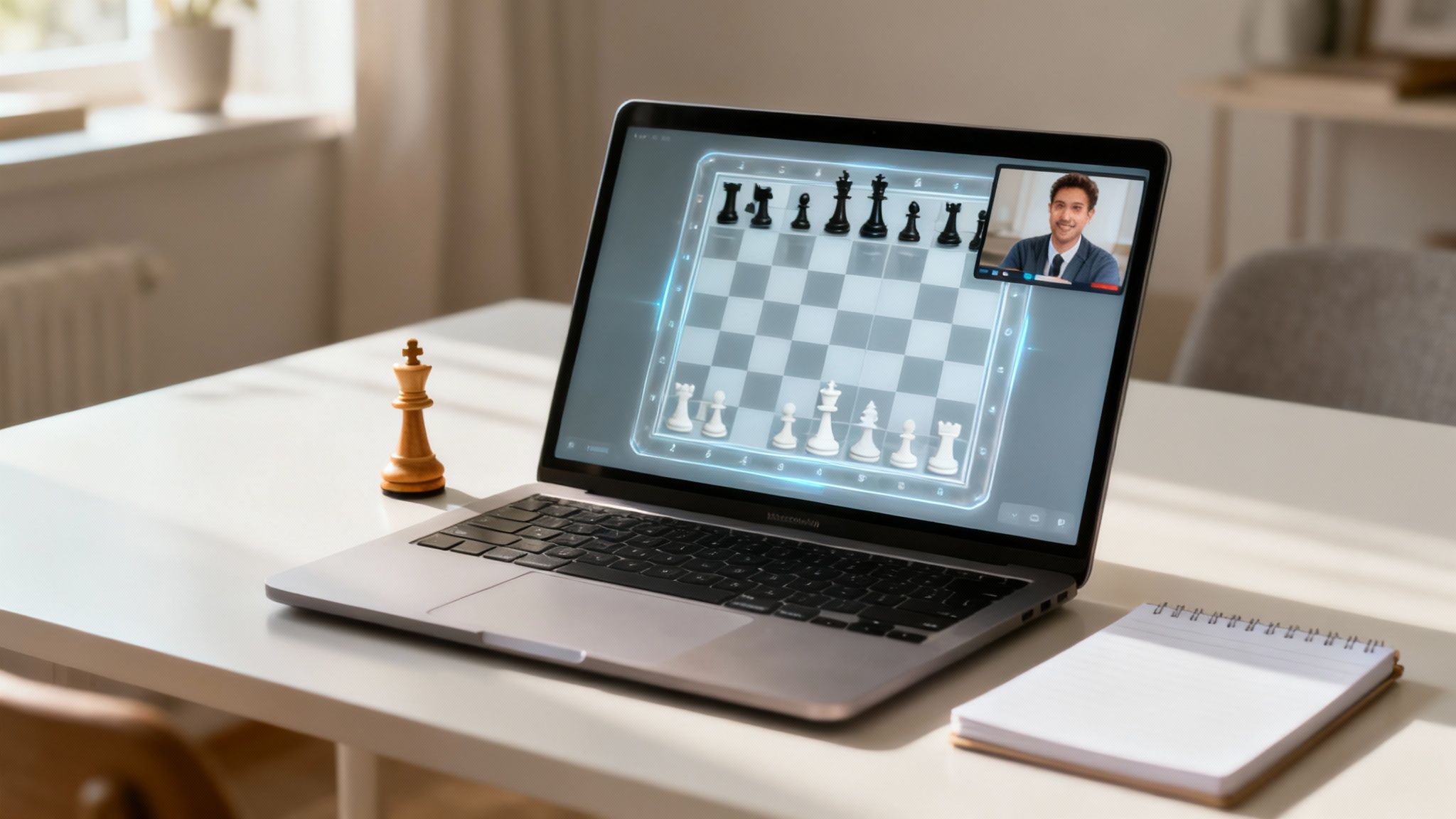
A while ago, learning chess meant you had to find a local club or a coach who lived nearby. That was okay for some people, but it wasn’t always easy. Now, the internet has totally changed how players get better. Online coaching brings the best teachers and coolest tools right to your screen.
This has opened the doors for everyone to get better at chess. You don’t have to worry about travel or sticking to a strict schedule anymore. Instead, you can connect with an amazing coach from anywhere in the world, at a time that works for you. It’s this mix of convenience and quality that’s helping players of all ages improve, faster.
The Rise of Digital Chessboards
Online chess has gotten huge, especially in countries where chess is a big deal. The online coaching market in India, for example, has blown up. Right now, over 70% of learners there like online classes better, mostly because they’re so easy to get to and offer the best coaches.
The big chess websites have seen this, too. They say that players from India are their biggest group of users, playing an incredible 17 million games every single day. You can learn more about this in this detailed market report on online chess.
This isn’t just about playing more games; it’s about learning in a smart, organized way. Online coaching gives you a clear path to get better that most people just didn’t have ten years ago.
What Makes It So Effective?
So, why is this way of learning so popular? It really comes down to a few key things that make chess coaching online such a great way to learn.
- Lessons Just for You: Your lessons are made just for you. A good coach will find your weaknesses and help you work on the exact things you need to improve.
- Learn from Experts: You’re not stuck with coaches who live nearby. You can learn from an International Master or even a Grandmaster, no matter where they are.
- Cool Learning Tools: Coaches use special computer programs to look at your games, share interactive chessboards, and give you quick feedback that helps.
- Flexible and Comfy: Learn from your own home, on a schedule that fits your life, not the other way around.
Think of it like this: old-school coaching is like reading one textbook. Online coaching is like having a whole library with your own librarian who shows you the exact book you need, right when you need it.
This new way of learning mixes personal help with amazing technology. It helps players really understand their mistakes, learn new plans, and feel more confident when they play. Whether you’re just starting out or you’ve been playing for a while, this is a great way to become a stronger, smarter chess player.
Online vs Traditional Chess Coaching at a Glance
To make it even clearer, let’s look at the main differences between learning online and the old-school, in-person way.
| Feature | Online Coaching | Traditional Coaching |
|---|---|---|
| Accessibility | Get top coaches from anywhere in the world | Only local coaches are available |
| Scheduling | Very flexible, fits your life | Set schedules that are often hard to change |
| Tools & Tech | Interactive boards, game analysis software | Physical board, looking at games by hand |
| Cost | Often cheaper, no travel costs | Can be more expensive, plus travel costs |
| Convenience | Learn from anywhere with internet | You have to travel to a specific place |
As you can see, while regular coaching is still good, online coaching gives you a level of freedom and access to experts that was impossible before. It’s a game-changer for anyone who really wants to get better.
What a Typical Online Chess Session Looks Like
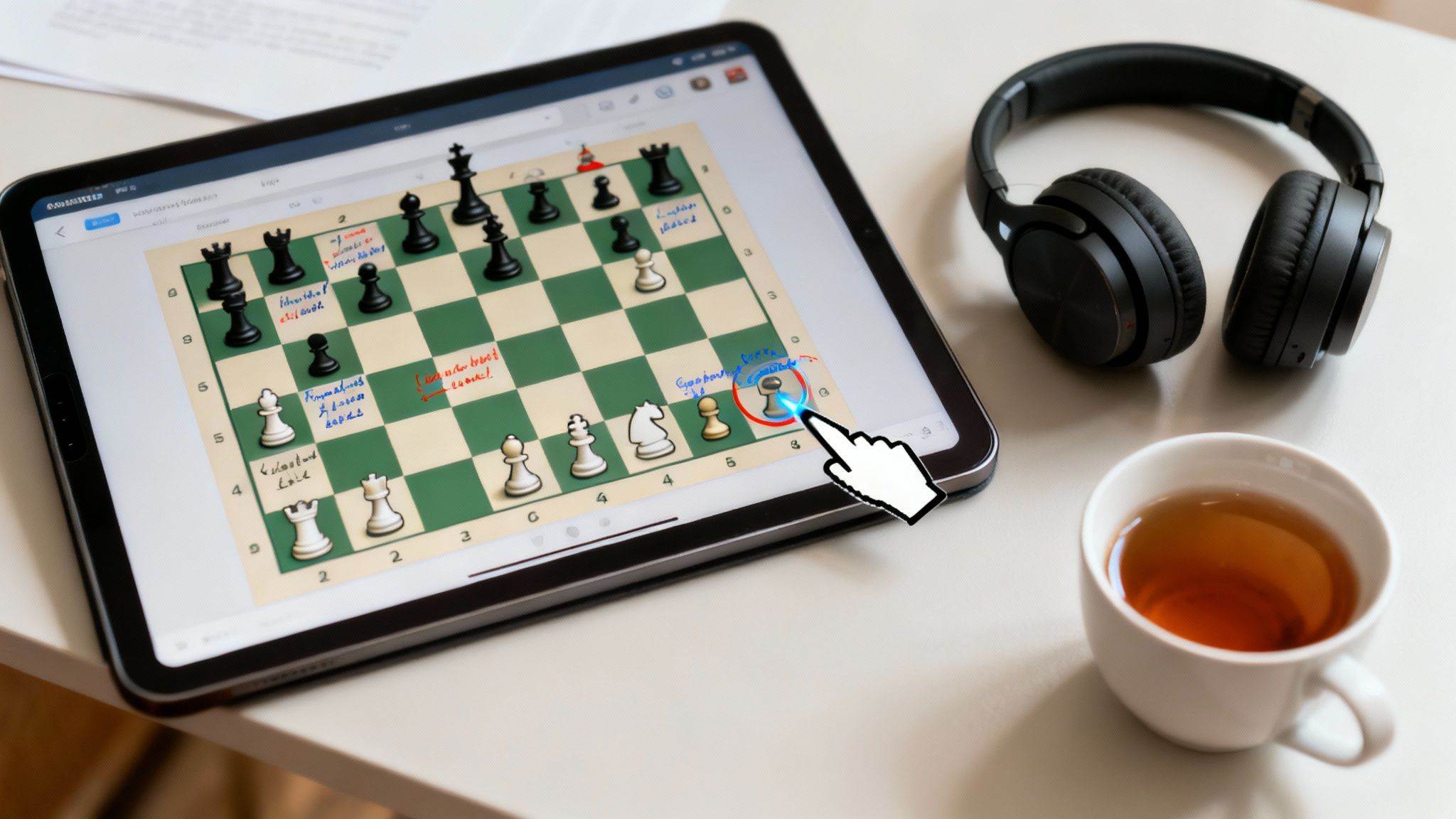
So, what actually happens in an online chess lesson? If you’re picturing just playing games for an hour, think again. A good coaching session is way more organized and interactive than that. Let’s take a look.
Think of it like being a detective, and your coach is your partner. Together, you’ll look at your recent games, search for clues about how you play, and solve the puzzles on the board. You do all this using some cool digital tools that make learning online feel easy and fun.
Most lessons are a mix of a video call and a shared digital chessboard. This means you can see and talk to your coach in real time, like they’re right there with you. You both can move the pieces, draw arrows to show ideas, and check out different moves together.
One-on-One vs Group Classes
One of the first things you’ll see is that online coaching comes in a couple of different types. The two main kinds are one-on-one sessions and group classes.
A one-on-one lesson is all about you. Your coach is 100% focused on your games, your questions, and your goals. This is great if you need to fix a specific weakness in your game or get ready for a tournament.
Group classes, on the other hand, feel more like a team practice. You’ll learn with a small group of other players who are around your skill level. It’s a great way to meet other kids who love chess, share ideas, and play some friendly games.
A good way to think about it is this: a one-on-one session is like a private music lesson to get your technique just right. A group class is like being in a band, where you learn together and get inspired by each other.
Both types are super helpful. One-on-one coaching gives you very personal feedback, while group classes are fun and social, which can keep you excited to learn. Many players actually find that doing a mix of both works best.
The Tools of the Trade
To make all this happen, online coaches use a few important digital tools. These are the things that make online learning work so well. You’ll probably use a mix of these in every lesson.
Here’s what you can expect to use:
- Video Calls: Tools like Zoom or Google Meet are what everyone uses. This face-to-face connection is super important for asking questions and getting clear answers.
- Interactive Digital Chessboards: Websites like Lichess or Chess.com are the classroom. They have amazing features that let you and your coach share a board. Your coach can draw colorful arrows, highlight important squares, and show you different moves live.
- Game Analysis Software: This is where the real magic is. Coaches use powerful chess programs to check your games, find mistakes, and show you better moves you might have missed. It helps you see exactly where you can improve.
These tools work together to create a cool learning space right on your computer. Your coach will guide you through your games, explain tough ideas in simple ways, and give you “homework”—like puzzles to solve or certain openings to study. It’s an organized, powerful, and surprisingly fun way to get better at chess.
The Real Benefits of Learning Chess Online
So, what’s the big deal with online chess coaching? It’s more than just an easy option; it can really speed up how fast you get better. When you trade a real classroom for a digital one, some pretty cool advantages show up.
Let’s start with the most obvious one: flexibility. Life gets busy with school, homework, and other stuff. Online lessons are great because they work around your schedule, not the other way around. You can book a lesson for an afternoon or a lazy Sunday morning—whatever works for you. This makes it way easier to keep up with your training, which is the real secret to improving.
Plus, you get to learn from home. No more traveling across town, which saves you time and money. As long as you have a good internet connection, you’re ready to go.
Access the Best Coaches Anywhere
Imagine getting lessons from a top coach who lives hundreds of miles away. With chess coaching online, that’s not just possible—it’s normal. You’re no longer stuck with the few teachers in your town.
You can connect with International Masters and even Grandmasters from all over. This gives you a huge pool of talented people to choose from, letting you find a coach whose teaching style is perfect for you. Having more experts to pick from means you’re much more likely to find the right person to help you on your chess journey.
This is already making a huge difference. The growth of online coaching in India is clear when you see the growing number of top players. In 2024 alone, India got 15 new International Masters and 8 new Grandmasters, and you can bet many of them trained for hours online. In fact, the top online chess schools have taught over 25,000 students in the last year. You can read more about the top online chess classes in India to see for yourself.
It proves that getting great coaching from anywhere isn’t just a nice idea—it’s creating the next generation of champions.
Powerful Tools for Faster Improvement
Online coaching is much more than just a video call with a chessboard. It uses some seriously cool technology to make learning better and, honestly, more fun. These digital tools give you information that’s hard to get with just a physical board.
- Instant Game Analysis: Right after a game, your coach can check it with powerful software. This instantly points out mistakes and shows you stronger moves you might have missed.
- Interactive Learning: You and your coach can use a shared digital board to move pieces, draw arrows, and highlight important squares together. It makes understanding tricky ideas so much easier.
- Recorded Lessons: Many coaches will record your sessions. This is a huge plus because you can re-watch a lesson whenever you need a reminder on a certain tactic or opening.
Think of it like this: a regular chess lesson is like being given a map. An online lesson is like getting a GPS that not only shows you the map but also gives you step-by-step directions, finds a new route when you make a mistake, and tracks your progress.
These tools give you clear, helpful feedback. Instead of just hearing you made a mistake, you see why it was a mistake and learn how to avoid it next time. It’s a focused way to fix your weaknesses, build confidence, and watch your rating go up.
How to Find the Perfect Online Chess Coach
Finding the right online chess coach is a lot like finding a great teammate. When you get along well, everything feels easier, and you start getting better way faster than you thought you could.
But with so many coaches out there, how do you pick the right one? Don’t worry, it’s not as hard as it sounds.
Let’s break down what to look for, the right questions to ask, and where to find coaches who can help you reach your goals. This isn’t just about finding someone who’s good at chess; it’s about finding someone who’s good at teaching chess in a way that works for you.
What Makes a Great Coach
Before you start looking, you need to know what a great coach is like. It’s about more than just a high rating. A really great coach is a good teacher, a good motivator, and a great communicator all in one.
First, think about their experience. Have they worked with players at your level before? A coach who’s great with advanced players might not be the best for a total beginner, and the other way around. It’s important to find someone who understands your challenges.
Also, think about their personality. Are they patient and encouraging? Do they explain things in a way that’s easy to understand? The best coaching happens when you communicate well, so finding someone you feel comfortable with is super important.
This infographic shows the key questions to think about: your goals, your current skill level, and the teaching style that works best for you.
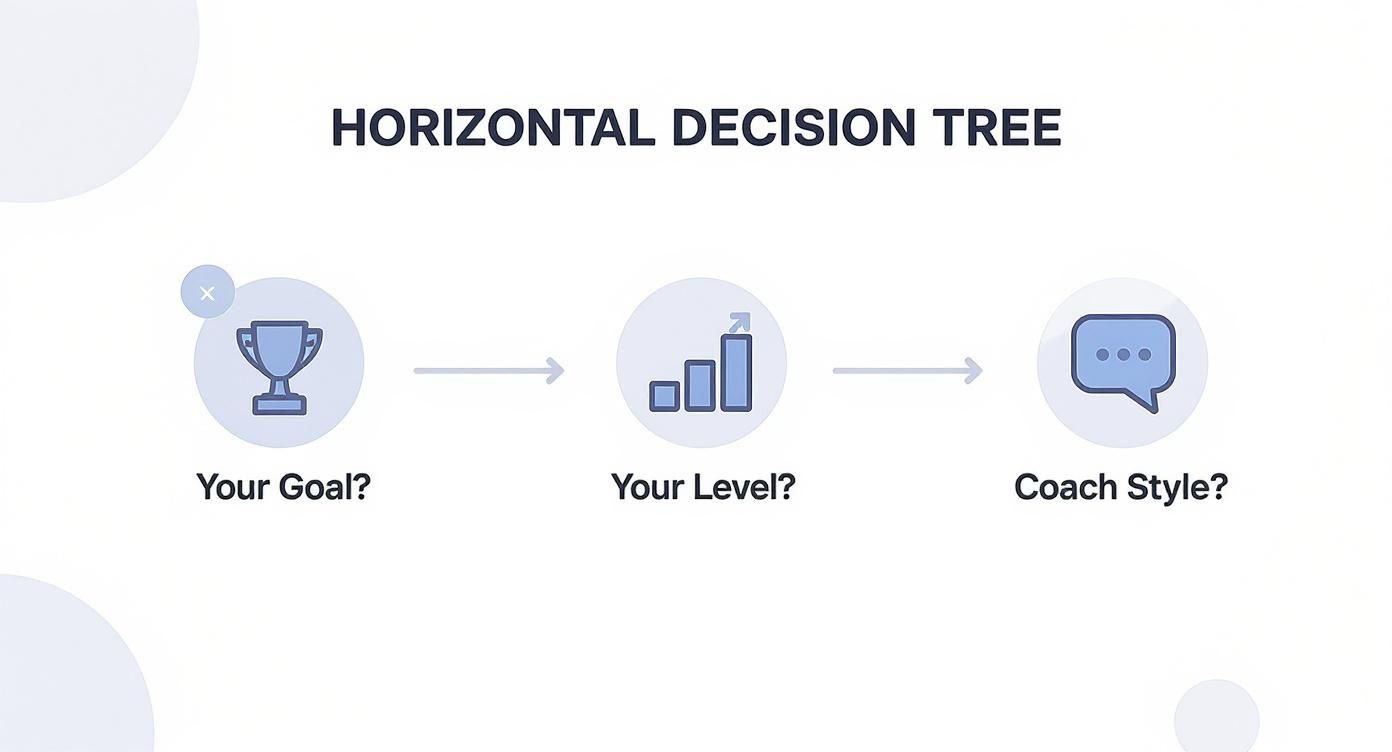
This chart helps you figure out what you need from a coach by starting with what’s most important to you.
Key Questions to Ask a Potential Coach
Once you have a short list of coaches, it’s time to chat with them before you decide. Most coaches offer a short, free call to see if you’re a good match. This is your chance to ask some really important questions.
Here are a few key things to ask:
- What is your teaching style? Do they focus on tactics, openings, or overall strategy? Are their lessons very structured or more flexible?
- How do you track a student’s progress? Will they give you reports, check your online games, or use special software to see how you’re getting better?
- What kind of homework or practice do you give? This tells you what to expect between lessons and how they help you remember what you’ve learned.
- Can you share a success story from a past student? Hearing about how they’ve helped others can make you feel more sure that they can help you.
Think of this first chat like an interview. You are hiring someone for an important job: to be your chess guide. Asking good questions helps you hire the right person.
Getting clear answers will help you understand their methods and decide if their style fits how you like to learn.
To make things even clearer, use this checklist to compare your options.
Quick Checklist for Choosing Your Coach
Use this table to check and compare chess coaches to find the best one for your learning style and goals.
| Checklist Item | Why It Matters | What to Ask or Look For |
|---|---|---|
| Experience at Your Level | A coach for beginners needs different skills than one for experts. | “Have you coached players with a rating like mine?” |
| Teaching Philosophy | Does their style match how you learn? (e.g., puzzles vs. big picture talks) | “What’s your general approach to teaching chess?” |
| Communication Style | You need to feel comfortable asking “stupid” questions. | Do they seem patient and encouraging on the first call? |
| Success Stories/Testimonials | Proof that their methods work for other people. | “Can you give an example of how you helped a student improve?” |
| Tools and Resources | Do they use modern tools like Lichess studies, ChessBase, or custom puzzles? | “What websites or software do you use for lessons?” |
| Pricing and Packages | Needs to fit your budget and how much you want to commit. | Ask for a clear list of their prices and package deals. |
This quick check can save you a lot of time and help you make a better choice.
Where to Find Your Coach
So, where do you actually find these awesome coaches? Luckily, there are a few trusted places where you can connect with experienced teachers.
Many players start their search on big chess websites. Sites like Chess.com and Lichess have large lists of coaches with detailed profiles, ratings, and reviews from other students. These sites make it easy to sort coaches by their price, language, and what they’re best at.
Another great option is to look into special chess schools. These places often have a team of coaches they trust and offer organized programs. If you’re looking for a full learning plan and not just one coach, you might want to check out this list of modern chess courses that give you a complete education.
And for those who are curious about becoming a teacher themselves, there are great guides on how to start an online coaching business that explain the whole process. It can give you a new appreciation for what goes into great coaching.
Don’t be afraid to look around. Taking the time now to find the perfect coach will help you a ton on your chess journey.
Creating Your Personal Chess Training Plan
Just playing a lot of games isn’t enough to get better at chess. Think about it – a chess master never starts a match without a plan, so why would you start your training without one? This is where a good online coach becomes your most powerful piece.
Your coach will work with you to create a training plan that actually makes sense for you. A great plan isn’t just some random document you download; it’s a living strategy that changes as you get better. It’s the difference between wandering in the dark and having a clear map to your goals.
A personal plan makes sure every minute you spend studying is worth it. Instead of doing random puzzles, you’ll work on the specific types of puzzles you mess up in your own games. This focused approach is a huge reason why chess coaching online works so well.
What Goes Into a Training Plan?
So, what does one of these plans actually look like? A good training plan is basically a weekly schedule that covers all the important parts of chess. Your coach’s job is to help you find the right mix based on your skill level and what you want to do.
Think of it like a balanced diet for your chess brain. You can’t just eat one type of food and be healthy. In the same way, you can’t just study openings and become a great all-around player.
Here are the key things your coach will mix into your schedule:
- Tactics and Puzzles: This is your daily brain workout. Solving puzzles keeps your mind sharp and helps you spot checkmates, forks, and other winning moves quickly.
- Opening Study: You’ll learn the first few moves for certain openings that fit your style, so you can start every game feeling ready.
- Game Analysis: This is where you really learn. Your coach will go over your games with you, pointing out common mistakes and showing you where you did well.
- Endgame Practice: Knowing how to win when there are only a few pieces left is what makes good players great.
- Practice Games: Finally, you’ll put it all together by playing games, and then looking at them later to see how well you used what you learned.
Sample Plans for Different Levels
Of course, your training plan will look very different if you’re a total beginner versus an experienced tournament player. A good coach knows exactly how to change the focus to help you at your level.
For example, a beginner’s plan will be all about the basics, like learning the rules and simple puzzles. The goal is to build a strong foundation.
A chess training plan is like building a house. For a beginner, you focus on a strong foundation with rules and basic tactics. For an advanced player, it’s about adding the complex wiring and cool furniture of deep strategy and opening theory.
As you get better, the plan changes. An intermediate player’s schedule will go deeper into openings and more complex endgames. For more ideas on how to set up your practice, check out this guide on creating a chess training plan for rapid improvement.
How Coaches Track Your Progress
A great plan is useless if you can’t see if it’s working. Modern online coaching uses some awesome tools to see exactly how you’re getting better and where you still need to work.
Top chess schools have found that using organized online systems keeps students much more interested. They’ve seen a 40% increase in students showing up for lessons and a 35% rise in homework getting done after using these tools. Features like automatic progress tracking and interactive puzzles make learning feel more like a game than a chore.
Your coach will use this information to change your plan as you go. If you suddenly start having trouble with a certain type of endgame, they can add more practice on that to your schedule for next week. This constant feedback makes sure your training is always focused on what will help you improve the most, right now.
Getting the Most Out of Every Lesson
You’ve found your coach and made a solid training plan. Awesome. But now the real work starts: making every single minute of your coaching worth it. Just showing up for the lesson isn’t enough; to get better quickly, you need to be an active, interested student.
Think of it this way: your coach is the captain of the ship, but you’re the one pulling the ropes. When you come to each lesson ready to learn, your skills will get so much better. It’s all about the small things that add up to big results.
Before the Lesson Begins
A great lesson starts long before you log on. A little bit of prep work helps a lot. Don’t just jump into a session without thinking. Give yourself about 15-20 minutes before to get your mind into “chess mode.”
This warm-up is simple but really works. Start by looking over the notes from your last lesson. What was the main thing you learned? Did your coach give you certain puzzles or openings to study? A quick look back helps you remember and connects last week’s ideas to what you’ll learn today.
Another great idea is to come with questions.
- Did you play a game this week where you felt totally lost?
- Is there a certain trick you keep falling for?
- Confused about an opening move your opponents keep playing?
Writing down a couple of questions shows your coach you’re thinking hard about your game. More importantly, it helps them focus on exactly what you need help with.
During the Lesson Stay Engaged
Once the lesson starts, your job is to be an active part of it. Don’t be afraid to ask questions, share what you’re thinking, or even (politely!) question a suggestion. The more you talk and participate, the more you’ll learn.
Your chess lesson is a conversation, not a lecture. When you share what you were thinking during a game—even if it was wrong—you give your coach a peek into your mind. That’s how they can help you fix bad habits and build better ones.
Being involved is the secret ingredient. When your coach explains something, try to say it back in your own words. If they show you a new tactic, ask where you could use it in your own games. This kind of active learning is what really makes new information stick in your brain.
After the Lesson Do Your Homework
The lesson might be over, but the learning isn’t. What you do between sessions is just as important as what you do during them. This is your time to take the ideas from your coach and really make them yours.
Your “homework” isn’t for a grade; it’s all about practice. This usually means a mix of things:
- Solving Assigned Puzzles: Your coach will often give you specific puzzles that focus on your weak spots.
- Studying Key Games: They might ask you to look at a famous game to see a certain strategy being used.
- Playing Practice Games: Put what you’ve learned to the test! Play a few games online and try to use that new opening or endgame skill.
Doing this follow-up is what turns ideas into real skills. To get the most out of this, you might want to look into effective strategies for measuring student engagement, which can help you understand your own learning patterns better. By being an active student, you’ll make every lesson a big step toward becoming the player you want to be.
Frequently Asked Questions
Still have a few questions about online chess coaching? That’s totally normal. Here are some simple answers to the things players and parents often ask.
How Much Does Online Chess Coaching Cost?
This is probably the most common question, and the answer is, it can be very different. A new coach just starting out might charge around ₹800 per hour, while a famous International Master could be ₹4,000 per hour or even more. The price really depends on the coach’s rating, their experience, and how many people want to learn from them.
Most coaches will offer a package deal, which is a great way to save money. For example, you might get a discount for buying 10 lessons at once. If you’re serious about getting better, it’s always a good idea to ask about these packages to get the most for your money.
What Age Is Best to Start Chess Coaching Online?
There’s no single “best” age, but usually, most kids are ready for online lessons around 6 or 7 years old. At this age, they can usually focus for a 30 to 45-minute lesson and understand the basic rules. Some coaches are amazing at working with younger kids, using fun stories and games to keep them interested.
But here’s the best part: chess is for everyone. It doesn’t matter if you’re 8, 18, or 68. If you love the game and want to get better, it’s never too late to find a coach.
The best time to start learning chess was yesterday. The second-best time is right now. Don’t worry about age—focus on your desire to learn and improve.
Do I Need to Be Good at Chess to Get a Coach?
Not at all! Actually, it’s the other way around. Getting a coach when you’re a beginner is one of the fastest ways to learn the right way. A good coach will teach you the basics correctly from the start, helping you avoid the bad habits many players pick up on their own.
Think of it like learning guitar. You wouldn’t wait until you’re a pro to take lessons, right? You take lessons to become a pro. Chess coaching online works the same way—it gives you a solid start to build on.
What Equipment Do I Need for Lessons?
You really don’t need much, which is one of the great things about online learning. Here’s a quick list of what you need:
- A Reliable Computer: A simple laptop or desktop is perfect.
- A Stable Internet Connection: This is important for a smooth video call and a digital chessboard that doesn’t lag.
- A Webcam and Microphone: Most laptops today have these already built in.
- A Free Chess Account: You’ll need an account on a site like Lichess or Chess.com, because this is where most online lessons take place.
And that’s it! You don’t need any expensive or fancy stuff. With just these few things, you’re all set for your first lesson.