Getting better at chess is way different now. You don't need a local club or a super expensive coach to start. The best chess training online is right at your computer. This guide will show you how to use it to really level up your game.
Your Guide to Getting Better at Chess Today
It's a great time to be a chess player. In the old days, you had to find dusty chess books and hope the one good player in town had time to teach you. Now, you can get lessons from grandmasters, use powerful computer analysis, and play endless games without leaving home.
This big move to online learning has made chess open to everyone. It doesn't matter if you're just learning how the pieces move or if you're a skilled tournament player, there’s a path for you.
This has really taken off, especially in places like India. One study showed that over 70% of learners now like online coaching better. It's easy to see why—it's more convenient, costs less, and has fun tools that make learning feel less like homework. You can explore more insights on this market shift to see why so many players are switching.
This guide will show you exactly how to use these cool tools. We’ll help you make a smart training plan that fits your life and your goals. It’s time to stop playing random games and hoping to get better. It’s time to train with a purpose.
What Makes Online Training So Good?
So, what's the big deal about learning chess online? It really comes down to a few key things that old-school methods just can't match. You get tools and chances that used to be only for the best players in the world.
Here’s a little of what you can expect:
- Quick Feedback: After a tough game, you don't have to guess where you messed up. AI tools check your game in seconds, showing your mistakes and better moves.
- Tons of Resources: Imagine having millions of puzzles, thousands of video lessons, and databases with every important game ever played. It's all there for you.
- Learn Anytime: You can study whenever and wherever you want. Have 15 minutes before class? That’s enough time for a few puzzles.
- A Worldwide Community: You can play against and learn from people all over the world, any time of day or night.
The goal isn’t just to play more chess; it's to practice smarter. Online tools help you find your weak spots and turn them into strengths, one lesson at a time.
In the end, good online chess training is all about having a plan. It lets you create a program that focuses on what you need most. Whether that’s finally understanding a tricky opening or mastering a basic endgame, the tools are waiting. Let’s get them organized for you.
Your Online Chess Training Toolkit
Before we go on, it helps to know what tools you'll be using. Think of this as your personal chess gym—each piece of equipment does a special job.
Here’s a quick look at the basics you'll need for your online chess journey.
| Tool Type | What It Does | Why You Need It |
|---|---|---|
| Playing Platform | Lets you play live games against people from all over the world. | The best way to use what you've learned. You need it for real practice. |
| Tactics Trainer | Gives you tons of puzzles to solve, helping you see patterns better. | Makes your tactical skills and thinking sharper, which decides most games. |
| Video Course Library | Has lessons on openings, middlegames, and endgames from top players. | Builds your basic understanding of chess strategy. |
| Game Analysis Engine | A powerful chess computer that checks your games to find mistakes and better moves. | Gives you honest, quick feedback to find and fix your weak spots. |
| Opening Explorer | A database showing which opening moves are popular and how well they work. | Helps you build a good set of openings and understand common plans. |
| Personal Coach/Mentor | A human expert who gives you personal advice, feedback, and study plans. | Gives you support and expert tips that tools alone can't give. |
Having these tools is like having a grandmaster's library and a personal helper available 24/7. Now, let's learn how to use them well.
Choosing the Right Platform and Coach
Getting into online chess training can feel like a lot. With so many websites, apps, and coaches, it's hard to know where to begin. But this first choice is a big one—the platform and coach you pick will guide your whole journey.
Let's make it simple. We'll break down how to pick the right tools for you, so you can stop guessing and start getting better. The goal is to find a setup that fits your learning style and budget perfectly.
The Big Three Platforms
For most players, the journey starts on one of the big chess websites. Each one has its own feel, and knowing the difference can help you find a place you like.
-
Chess.com: Think of this as the giant mall of online chess. It has a huge community, tons of lessons, a giant puzzle library, and articles on almost everything. If you want one place that has it all, it’s a great place to start. Many of its best features cost money, but the subscription is worth it.
-
Lichess.org: Lichess is awesome because it's 100% free, forever. It’s run by volunteers and donations. You get unlimited puzzles, a powerful analysis board, and a clean, simple design. It might not have the fancy video courses of other sites, but for the main training tools, it’s amazing.
-
Chessable: This site is all about learning, especially openings. It uses a smart learning trick called "spaced repetition" to help you remember moves and ideas. If you learn best through structured courses and practice, Chessable is a great tool, though you usually have to buy the courses one by one.
For a bigger look at what's out there, a simple guide to the best online training platforms can give you more ideas. It helps to see what else is available before you pick one.
When to Hire a Chess Coach
Playing games and solving puzzles will help you improve a lot, but many players eventually get stuck. That's when a good coach becomes your best tool. A coach offers something no website can: a plan made just for your weaknesses.
So, when is it time to get a coach?
- You feel stuck, and your rating hasn't changed for months.
- You keep making the same mistakes, but you can't figure out why.
- You need someone to help you stay on track with a study plan.
The move towards getting expert help is clear. New numbers show that online coaching makes up almost 55% of the demand in the chess training world. Players are wanting more than just casual games; they want real help. But, money can be an issue. About 55% of players in India said that cost was a big problem.
Finding the Right Coach for You
Finding a coach is like finding a great workout buddy. They need to be more than just a strong player—they have to be a good teacher who gets along with you and understands your goals. Many platforms, like Chess.com, have lists where you can look for coaches.
Here's what a typical coach search page looks like, letting you sort by price, rating, and language.
These lists make it easy to compare your options and find someone who fits your needs and your budget.
A great coach won’t just tell you the right moves. They’ll teach you how to think, check your own games, and build study habits that stick.
Before you decide, always ask for a trial lesson. It’s your chance to see if you like their teaching style. Come with questions like, "How would you help me get better at tactics?" or "What would a study plan for me look like?" That first talk will tell you almost everything you need to know.
For a more detailed checklist, our article on what to look for in chess coaching online can help you look deeper. Making the right choice here is the first real step toward getting much better.
Building a Study Plan That Actually Works
Just playing tons of games online won’t magically make you a better player. We all wish it was that easy! Real improvement comes from having a smart, organized plan. This is when you switch from just playing chess to actually training for it.
Making a study plan might sound serious, but it’s really just about deciding how to use your chess time well. This section will walk you through building a simple but good plan that covers the most important parts of the game, no matter how good you are now.
Of course, before you can build the plan, you need to know where you'll be training. This simple picture helps break down how to pick the right chess platform for you.
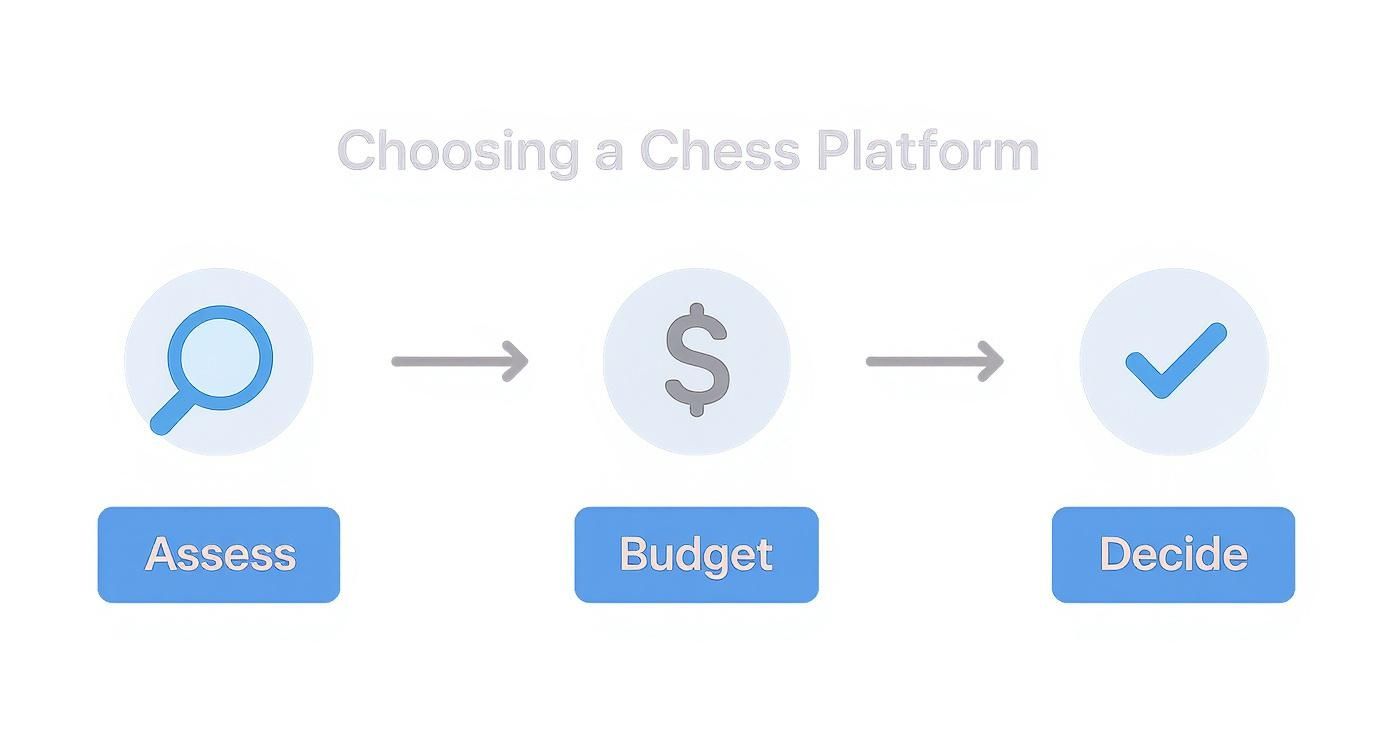
Following these steps makes sure you think about your goals, figure out your budget, and then pick a platform that will help your study plan. Now, let’s get into what that plan should actually look like.
Focusing on Openings the Right Way
It’s a classic trap for beginners: getting obsessed with openings. So many players spend hours trying to memorize long, complicated moves they see grandmasters play, only to forget them in a real game.
Instead of just memorizing, your goal should be to understand the main ideas behind an opening. For example, if you play the Italian Game, you should know that White wants to control the center, develop pieces quickly, and get ready for an attack. That's it.
- For Beginners (Under 1200): Forget about learning specific opening moves. Seriously. Just stick to the main rules: control the center, get your knights and bishops out, castle early, and connect your rooks.
- For Intermediate Players (1200-1800): This is the time to build a small set of openings you can count on. Pick one opening for White, and one defense against 1.e4 and 1.d4 for Black. Focus on understanding the common plans and pawn setups that come from them.
The key is to learn just enough to get to a good middlegame without falling for any cheap tricks.
Making Solid Middlegame Plans
The middlegame is where the real fun happens. It's where you can be creative, but it's also where most players feel totally lost. The opening moves are done, and now… what?
The secret to the middlegame is having a plan. And no, it doesn't have to be some amazing, 10-move idea. A good plan can be as simple as, "I want to attack my opponent's weak pawn," or "I need to trade off their really strong bishop."
To find a plan, get used to asking yourself these questions:
- What are my opponent's weaknesses? (A king that's not safe? A weak pawn?)
- Which of my pieces are good, and which are bad? (A knight on a great square vs. a bishop blocked by its own pawns?)
- Where do my pieces want to go?
Answering these questions will help you find a smart plan. It turns a messy, confusing position into a set of smaller, easier problems to solve.
Mastering Important Endgames
So many players totally ignore the endgame. They think it’s boring, but this is a huge mistake. Knowing your endgames is like having a superpower. It helps you win games that look like a draw or save games that feel lost.
You don't need to know every single endgame position. Just start with the most important ones that show up all the time.
Knowing just a few key endgame positions can easily add 100-200 rating points to your game. It's one of the best things you can study in your online chess training.
Start by mastering these basics:
- King and Pawn vs. King
- Rook and Pawn vs. Rook (especially the Lucena and Philidor positions)
- Basic checkmates like King and Rook vs. King
These positions are the building blocks of all other endgames. Once you know them really well, you'll feel much more confident when most of the pieces are off the board.
Getting the Most from Tactics Puzzles
Tactics decide who wins in more than 90% of games between regular players. If you want to get better quickly, there is no faster way than doing tactics training. Every online chess platform has a tactics trainer, and it should be part of your daily routine.
But here’s the thing: just doing puzzles isn't enough. You have to do them the right way. Don't just guess the first move that looks good. Treat every puzzle like it's a key moment from a real game.
A Better Way to Solve Puzzles:
- Before you move, look for all the checks, captures, and threats for both you and your opponent.
- Think through the main moves in your head all the way to the end. See the checkmate or the winning position.
- Only after you're sure, play the first move.
This careful way of doing puzzles is what actually trains your brain and helps you stop making the mistakes that lose you games. Remember, the goal of puzzles isn't to get a higher puzzle rating; it's to build the habits that will help you find those winning moves in your real games.
How Top Players Use Tech To Get Stronger
Let's be real, the way champions train today is nothing like it was years ago. Grandmasters aren't just looking at dusty old game books; they're using powerful technology to get every possible advantage.
The great news? Those exact same tools are available to you, and they can totally change how you do your chess training online.
Your new best friend is the chess engine. Think of an engine like Stockfish as the perfect practice partner—it's super honest, crazy strong, and it never gets tired. It sees everything.
But here’s the secret: just having an engine isn't enough. Learning to use it the right way is a skill. The goal isn't just to see the "best" move after you make a mistake. It's about figuring out why a move is better. This small change in how you think is what separates players who get way better from those who stay stuck.
Learning From Your Mistakes With An Engine
The moment a game ends, the real work starts. Before you even turn on the computer, take a few minutes to check the game yourself. Write down your thoughts—where did you feel unsure? What was the big moment where the game changed?
Once you've done that, it's time to let the engine work. Most platforms will give you a nice graph, pointing out every bad move and mistake.
- Don't just look at the bad move. When the engine shows you a mistake, don't just nod and move on.
- Ask "Why?". Make yourself figure out why it was a mistake. Did you leave a piece hanging? Did you make your king unsafe? Did you give up control of the center for no reason?
- Play out the engine's suggested moves. Follow the computer's line for a few moves. Watch how the game changes and how the engine punishes your mistake.
This turns a painful loss into a great lesson. You'll quickly start to see patterns in your mistakes, which is the first and most important step to getting rid of them for good.
How Top Coaches Use AI For Preparation
This isn't just about looking at old games. Modern coaches use tech to get their students ready for what's next, especially for big tournaments.
For example, Grandmaster coaches in India now use AI engines like Stockfish for super deep preparation. They'll copy an opponent's playing style, letting a student practice against a "digital copy" of their next opponent. This has made top-level coaching easier to get than ever before. You can read more about this coaching transformation in India and see how it’s helping the next generation of players.
A chess engine is like a microscope. It lets you zoom in on the most important moments of a game and see the tiny details that make the difference between a win and a loss.
This method helps players make a special game plan for certain opponents, which takes away their element of surprise.
Finding And Fixing Your Weak Spots
If you check your games with an engine all the time, your own weaknesses will become super clear. Maybe you always get into trouble when you have a certain pawn structure, or maybe you have a blind spot for simple tactics in the middlegame.
An engine doesn't care about your feelings; it will point out these repeating mistakes with pure logic. Once you know what they are, you can make a training plan to fix them. Platforms that have special tools for this, like the ones in our guide to Chess Tempo online, are perfect for creating your own puzzle sets.
Instead of doing random puzzles, you can focus on the exact patterns you need to learn. This kind of focused practice is one of the fastest ways to turn a weakness into a strength and see a real jump in your rating.
Turning Your Practice Into Real Results
Having a great study plan is a fantastic start, but it’s only half the battle. How do you actually know if all that hard work is helping? This is where we connect your daily practice to winning more games, whether online or in person.
It’s all about tracking your progress so you can see what’s working and what isn’t. This isn’t just about feeling good; it’s about making smart changes to your chess training online so you’re always getting better.
We also need to get you ready for the mental side of the game. Chess isn’t just about finding the best moves; it’s about handling pressure, bouncing back from a tough loss, and staying confident when things get tricky. Let’s get you ready for the real test.
How To See Your Improvement
It’s hard to notice small improvements every day. You can feel like you’re stuck even when you’re learning a lot. That’s why tracking a few simple numbers is so helpful. They give you real proof that your training is working.
You don’t need a complicated chart, either. Just keep an eye on a few key things that most online chess platforms give you for free.
Here’s what I suggest watching:
- Your puzzle rating: This is one of the clearest signs you're getting better. If your puzzle rating is going up, it means your tactical skills are getting sharper. No question about it.
- Game accuracy scores: After a game, most sites give you an accuracy score, usually as a percentage. This number shows how close your moves were to a computer's best choices. Even if you lose, a high accuracy score means you played a good game.
- Time spent on tactics: Doing things regularly is key. Spending 15-20 minutes on puzzles every single day is way better than doing it for two hours on a Sunday. Track your daily streak to stay motivated.
Watching these numbers go up over a few weeks or months is super satisfying. It shows that your hard work is turning into real skill.
Getting Ready For The Big Game
Walking into a tournament—or even just starting a serious online match—can be scary. A good pre-game routine can make a huge difference, helping you feel calm, confident, and ready to play your best. It's all about getting your mind in the right place before the clock even starts.
A good routine isn’t about studying at the last minute. It’s about feeling calm and focused so you can trust the skills you’ve already built. Your goal is to show up to the board feeling ready, not scared.
Try making a simple pre-tournament checklist. It might include things like getting a good night's sleep, eating a light, healthy meal, and doing a few easy puzzles just to warm up your brain. The goal is to make the process feel normal and automatic, which really helps with stress.
Building A Simple Opening Plan
One of the biggest worries for players is the opening. What if my opponent plays something I've never seen? Having a simple, solid opening plan is your best defense against these kinds of surprises.
You don’t need to memorize 20 moves of a complicated opening. You just need to know the first few moves of the openings you choose and, more importantly, understand the main goals and ideas.
For example, let's say you're playing as White and your opponent plays the Sicilian Defence:
- Know your plan: Have you decided which system you'll play against it? The Open Sicilian? The Alapin? Make the choice before the tournament.
- Understand the ideas: What are your usual plans in that system? Are you trying to control the center, attack the kingside, or something else?
- Review key moves: Quickly go over the first 5-7 moves of your main opening so they feel fresh in your mind.
This little bit of prep work means you’ll start most games on solid ground, letting you save your brainpower for the harder middlegame. You'll feel much more in control and less likely to fall for an early trap. Your chess training online should definitely include making and practicing this small but powerful opening plan.
Common Questions About Online Chess Training
As you get more into online chess training, you're going to have questions. It's totally normal to wonder if you're doing things right or using your time well.
Let's answer some of the most common questions players ask. Think of this as a quick FAQ to help clear things up, so you can get back to what's important—getting better at chess.
How Many Hours a Day Should I Train Chess Online?
This is probably the number one question everyone has, but the truth is, there’s no magic number. What's much more important than long hours is being consistent.
For most people, a focused 30 to 60-minute session every day is much better than a five-hour chess session once a week. Your brain needs time to learn new things, and daily practice is what builds strong, lasting habits.
A great daily routine could look like this:
- 15 minutes of tactics puzzles.
- 15 minutes playing a rapid game.
- 15 minutes checking that game right after you finish.
If you have a little more time, you could add an endgame exercise or a quick opening review. The real goal is to practice different parts of the game regularly. This steady way of doing things keeps you from getting tired of it and leads to real, long-term improvement.
Is Online Chess Training as Good as In-Person Coaching?
That's a great question, and the answer is that they both have their own good points. In-person coaching offers a great personal connection and can be very motivating. There's just something special about sitting across the board from an expert.
However, online chess training offers amazing flexibility and a huge amount of resources that are impossible to match offline. You can get lessons from a grandmaster who lives on the other side of the world or use powerful tools to get instant feedback on your games, day or night.
Online training has made great coaching available to everyone and, in most cases, it costs less. It removes distance as a problem and gives you access to the same tools the pros use.
Many serious players actually do both. They might work with an online coach for personal help while using platforms like Chess.com or Lichess for their daily practice and games. For more detailed answers to common questions about online training platforms, you might find some useful information in Buddypro's Frequently Asked Questions.
How Do I Stop Blundering Pieces Online?
Losing a piece by mistake feels awful, but don't worry—it happens to everyone, even the best players in the world! The good news is that you can definitely train yourself to do it less.
The single best way to make fewer blunders is to solve tactics puzzles every single day. This isn't just about finding cool checkmates; it's about training your brain to see patterns and spot danger automatically. The more tactical ideas you know, the safer your pieces will be.
Another great habit is to do a quick "blunder check" before every single move. It only takes a few seconds. Just ask yourself two simple questions:
- What does my opponent want to do next? (Look for their immediate threats).
- Are any of my pieces not defended or in a dangerous spot?
Taking that little pause to think defensively will save you from tons of simple mistakes and sad losses. It's a game-changer.
What Is the Best Way to Use a Chess Engine to Learn?
A chess engine is a great tool, but it's very easy to use it the wrong way. The biggest mistake people make is turning it on right after a game just to see the "best" moves. This teaches you almost nothing.
Instead, think of the engine as a super-strong practice partner. Your first step should always be to check the game by yourself. Go through the important moments and write down your own thoughts—what you think you did right and where you think you messed up.
After you've done your own homework, then it's time to turn on the engine.
When it points out a mistake, your job is to figure out why your move was bad and why the engine's move is so much better. Play out the computer’s suggested moves on the board to see how the game changes. Use it as a guide to help you understand better, not as a simple cheat sheet that just gives you the answers.