Getting better at chess isn't about playing for hours and hours. It's about being smart with your time. All you need is a simple, steady plan: find out where you are, practice the right things, and learn from your games. This guide will show you exactly how to do that.
Find Your Starting Point in Chess
Wanting to get better at chess is a great first step. But you can't plan a trip if you don't know where you're starting from. It’s like using a map without that "You Are Here" dot. A lot of players just play game after game, hoping to get better by magic. That way is slow and can be super frustrating.
The first real step is to be honest with yourself. Take a good look at your games. What are you really good at? Where do you mess up? Figuring this out is the start of any study plan that actually works.
Why It's Important to Check Your Skills
If you don't know your weaknesses, you'll waste a lot of time studying things that aren't even losing you games. Maybe you spend weeks learning a cool opening, but you keep losing because you miss simple two-move tricks in the middle of the game. Does that sound like you?
By finding your weak spots, you can put your energy where it will help the most. This is how you get better fast. It makes getting better feel less like homework and more like you're leveling up.
"A lot of what you think will help you improve might not get you the best results. The key is to see what you are doing to improve and ask yourself, 'will this actually help?'"
This is about moving from guessing to really looking at your game. For a deeper look at this kind of thinking, you can find awesome tips on how to reassess your chess and build a stronger way of thinking.
How to Check Your Chess Skills
Figuring out what you're good at and what you're not so good at doesn't have to be a big, complicated thing. You don't need a top-level coach to tell you what's wrong (though a coach can really help later on!). You can start right now, just by looking at your own games.
Here are a few easy ways to get a clear picture of where you are:
- Look at Your Last 10 Losses: Seriously, go back and check them out. Don't just look at the final mistake. Find the turning point. Where did the game start to go wrong? Was it a simple mistake, a mistake because you were running out of time, or did your opponent just play better?
- Break Down the Game: Think about the game in three parts. How do you feel after the opening—are you comfortable or already in trouble? Do you have clear plans in the middlegame? And what about the endgame? How do you feel when there are only a few pieces left?
- Use an Analysis Tool: Websites like Chess.com or Lichess have free game analysis. Let the computer check your games. It will show you all your blunders, mistakes, and missed chances to win. Look for patterns. Are you always making the same kind of mistake?
This gives you real facts, not just feelings. Once you know that you often miss tricks or you're not great in rook endgames, you'll have a super clear idea of what to work on.
Your Personal Chess Skill Checklist
To make this even clearer, use this checklist. Go through each area and give yourself a rating from 1 (very weak) to 5 (very strong). This is just for you—it's your personal map.
| Chess Skill Area | My Confidence (1-5) | What I Should Practice |
|---|---|---|
| Opening Knowledge | ||
| Tactical Vision | ||
| Positional Understanding | ||
| Endgame Technique | ||
| Calculation Ability | ||
| Time Management | ||
| Game Analysis |
After you fill this out, the areas with the lowest scores are your new top priorities. This simple exercise can show you a lot and is the first step to making a really good training plan.
Build a Daily Chess Training Habit
If you want to get better at chess, you have to treat it like a sport. You wouldn't expect to get good at cricket by playing just once a month, right? It's the same for chess. Doing a little bit of practice every day is way better than one long study session on the weekend.
This is all about building a habit. It doesn't need to be hard or take up your whole day. A focused one-hour routine is more than enough to see big improvements. The real goal is to make a little bit of chess practice part of your day, every day, just like brushing your teeth.
Your 60-Minute Daily Workout
Think of this as your daily trip to the chess gym. The idea is to work on different skills each day so you become a better all-around player. You can change the times to fit your life, but try to cover these three things every day.
A simple plan helps you focus on what really makes a difference. Here’s a sample schedule to get you started:
- 25 Minutes of Puzzles: Start by warming up your brain with puzzles. This is the best way to get better at spotting winning moves and avoiding mistakes that lose you the game.
- 15 Minutes of Endgame Practice: A lot of games are won or lost in the endgame. Spending just a little time here each day builds a super important skill that most players ignore.
- 20 Minutes of Game Time & Quick Review: Play one "rapid" game (at least 10 minutes for each player), then spend a few minutes looking it over right after. You don't need to do a deep dive yet, just a quick check for obvious mistakes.
This balanced plan makes sure you're not just playing without thinking, but actually building the skills you need to win more.
Making Your Practice Count
Just spending time isn’t enough. How you practice is just as important as how often you practice. For each part of your daily workout, you need a clear goal.
When you're doing puzzles, don't just make the first move you see. Take your time. Try to see the whole move sequence in your head before you touch a piece. For your endgame practice, pick one thing to work on for the week, like "king and pawn versus king," and practice it until you can do it without thinking. This helps the patterns stick.
The key is to switch from just playing to practicing with a purpose. Instead of just hoping you get better, you're building specific skills, one by one, day by day. This planned way of practicing is how you make real progress you can see.
And there's never been a better time to practice. Online chess has exploded, especially in India, making it easier than ever to find games. With cheap internet and tons of chess apps, millions of games are played every day. On a site like Chess.com, players play 15 million to 20 million games every single day. This gives you a huge number of people to play against, helping you learn and get better faster than ever before. You can read more about India's incredible chess growth and its causes.
Turning Your Plan into a Real Habit
Knowing what to do is the easy part. The real challenge is doing it every single day. The best way to build a habit is to make it simple and feel good to do.
This picture shows the basic flow from understanding your game to making a plan.
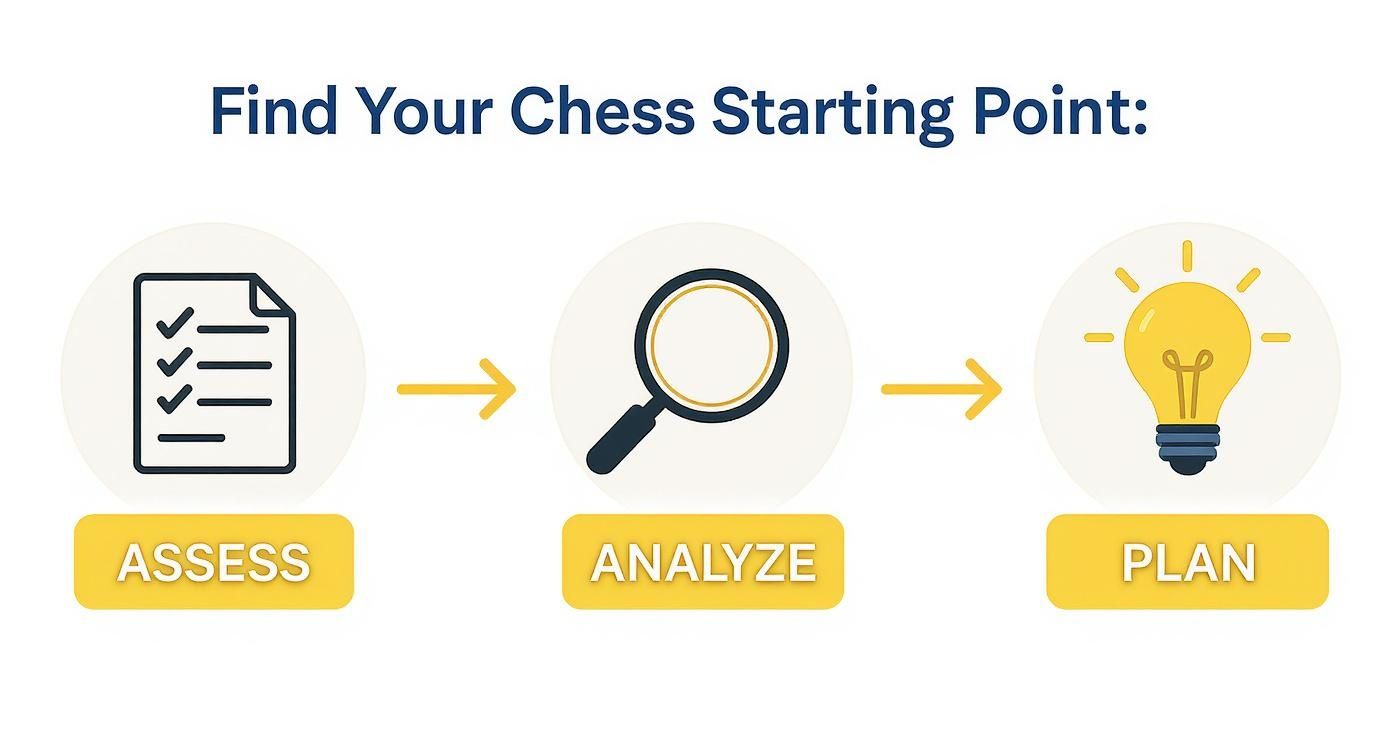
This cycle of checking, looking at, and planning is exactly what your daily habit is built on.
Here are a few tips to make your training stick:
- Pick a Consistent Time: Try to do your chess training at the same time every day. Your brain will start to expect it, making it easier to start.
- Don't Break the Chain: Get a calendar and put a big 'X' on every day you finish your training. Your only goal is to not break the chain of Xs.
- Track Your Progress: Keep an eye on your puzzle rating and your game rating. Seeing those numbers slowly go up is a great way to stay motivated.
Being consistent is your secret weapon. Even on days when you're tired, just doing 15 minutes of puzzles is way better than doing nothing. It keeps the habit going and tells your brain that chess is important. This daily effort is what separates the players who get stuck from those who keep getting better.
Mastering Each Phase of the Game
A game of chess is like a story, with a beginning, a middle, and an end. To get better, you have to be good at every part. Being good at the start or the end isn't enough; you need a plan for the whole game.
This is where a weekly schedule can be your secret weapon. Instead of just studying whatever you feel like, you can work on building a complete game. This helps fill in the gaps in your skills, leaving your opponents with no easy way to attack you.
The Problem with Only Studying Openings
So many players fall into the opening trap. They spend hours and hours memorizing long, complicated opening moves, hoping to surprise their opponent in the first 10 moves. And while knowing your openings is important, it's only a small piece of the chess puzzle.
What happens on move 11 when your opponent plays something you haven't memorized? If you don't understand the ideas behind the opening—where your pieces should go, what your main plan is—you'll be totally lost.
The real key is to learn the rules of the opening, not just memorizing moves. For example, instead of just learning the moves of the Italian Game, ask yourself why those moves are good. You'll quickly see it's all about controlling the center and getting your pieces ready for a fight. That kind of understanding helps you find the right move, even in spots you've never seen before.
Learning Middlegame Plans from the Best
The middlegame is where the game is won or lost. It's that messy, complicated part after the opening is over, and having a clear plan is everything. Without one, your moves are just random.
A great way to get better at the middlegame is to study the games of past champions. Grandmasters are amazing at making and carrying out winning plans. Pick a legend, like the attacker Mikhail Tal or the slow-and-steady Tigran Petrosian, and play through their famous games.
Don't just click through the moves. Try this instead:
- Pause after the opening: Stop around move 12 or 15 and take a good look at the board.
- Guess the plan: Try to figure out what the Grandmaster was trying to do. Are they getting ready for an attack? Are they trying to win a weak pawn?
- See what really happened: Play the next few moves and see how your guess compares to what they really did. Was it close?
Doing this regularly trains your brain to see what's important in a position. You start to notice patterns and ideas you can use in your own games. It’s like getting private lessons from the best players ever.
A good player knows that every piece has a job. The goal is to get all your pieces working together as a team. When they work together, you have a huge advantage going into the middlegame and beyond.
Making Endgame Practice a Priority
For many players, the endgame is the scariest part of chess. But it doesn't have to be. In fact, getting better at the endgame is one of the fastest ways to start winning more games. Most players at your level are shaky in the endgame, so if you're good at it, you'll have a big advantage.
You don't need to read a thick, scary book to get started. Just begin with the basic positions that happen all the time.
A few key endgame skills to practice are:
- King and Pawn vs King: Learn how to use your king to help your pawn march down the board.
- Rook Endgames: These happen in a huge number of games. Focus on simple ideas like cutting off the enemy king and making a passed pawn.
- Basic Mates: You should be able to checkmate with a King and Rook vs a lone King in your sleep.
Just spending 20-30 minutes on these basics a few times a week will build a super strong foundation. You’ll feel much more confident when the board is almost empty, knowing you have the skills to turn a small lead into a win.
A Sample Weekly Study Plan
Trying to fit all this in can feel like a lot, but a simple schedule makes it easy. Here's a sample plan that spreads your attention across all three parts of the game, making sure you're always working on becoming a complete player.
| Day | Focus Area (30-45 Mins) | Example Activity |
|---|---|---|
| Monday | Tactics & Puzzles | Solve 15 puzzles on Chess.com or Lichess, trying to get them all right. |
| Tuesday | Opening Principles | Look at one of your main openings and watch a short video on its key ideas. |
| Wednesday | Endgame Technique | Practice a basic endgame, like the Lucena position, against a computer. |
| Thursday | Tactics & Puzzles | Do a "puzzle rush" to work on your speed and seeing patterns. |
| Friday | Middlegame Planning | Look at one game from a classic Grandmaster that has notes explaining the moves. |
| Saturday | Play & Review | Play two longer games (15+10) and do a quick check of your mistakes. |
| Sunday | Rest or Light Review | Relax or watch some fun chess videos online. |
This balanced plan keeps you from getting stuck. By giving time to each part of the game every week, you'll build strong skills all-around that will make you a much tougher player.
Learn from India's Chess Champions
You can feel it, can't you? India is becoming a world leader in chess. It’s not just about the amazing Viswanathan Anand anymore. A whole new group of young, super-talented players is taking over the world, playing some of the most exciting chess we've ever seen.
This is great news for anyone learning the game in India. Why? Because you have the perfect role models right here. Players like Gukesh D, Praggnanandhaa, and Arjun Erigaisi aren’t just winning big tournaments; they're showing everyone a modern, brave way to play the game. Their games are full of awesome ideas for any player who wants to get better.
When you follow their games, you're not just a fan. You're a student with a front-row seat to the best lessons in modern chess.
What Makes Them So Good?
So, what's their secret? It’s not just one thing. It's a mix of hard work, playing in a super competitive group, and a mindset that never gives up. These champions grew up playing against each other, always pushing one another to get stronger with every game.
Think of it this way: if you play cricket with friends who are all trying to bowl faster and hit harder, you'll naturally get better too. The same thing is happening in Indian chess. The competition is so tough that everyone has to keep improving just to keep up.
This teaches us a very important lesson. One of the fastest ways to get better is by playing against people who are better than you. It makes you find better moves, think more carefully, and come up with better plans.
Study Their Games Like a Detective
Just watching their games isn't enough; you have to really study them. Pick one of your favorite Indian players and start looking at their recent games. Don't just click through the moves. Treat each game like a puzzle you need to solve.
Here’s a simple way to get started:
- Find a High-Stakes Game: Look for a match they played in a big tournament where there was a lot of pressure.
- Pause and Predict: After the first 10-15 opening moves, pause the game. Take a good look at the board and try to guess your hero's plan. Are they setting up an attack? Are they fighting for control of the center?
- Compare Your Idea: Now, play the next few moves and see what they actually did. How did their plan compare to yours? This simple exercise is a really good way to improve your own strategic thinking.
When you do this regularly, you start to see the game like a Grandmaster. You'll pick up new strategies and ideas that you can try in your own games right away. It’s like getting a peek inside their brain.
The success of India’s young chess champions is no accident. It’s built on tough competition, lots of preparation, and a shared goal to be the best in the world. Their journey shows a clear path for any player who wants to be great.
This success is happening because of an amazing group of young players. In fact, most of the top 10 to 15 players in India, for both men and women, are under 25 years old. This youth movement is so strong that even world champions like Magnus Carlsen and Vladimir Kramnik agree that India is going to be the top chess country for years. For you, this means the best examples to learn from are right here at home. You can read more about India's rapid chess progress on Times of India.
Learn to Fight Until the Very End
One of the most inspiring things about players like Praggnanandhaa is how hard they fight. They never, ever give up, even in positions that look completely lost. They are amazing at making problems for their opponents and fighting for every last chance to get a draw or even steal a win.
This is a huge lesson. So many players get sad when they're in a bad position and just give up in their heads. But the top players know that chess is a hard game, and even the world's best can make mistakes if you keep the pressure on.
By studying how Indian champions defend tough positions, you learn how to be clever. You see how to set traps, make the game more complicated, and make your opponent's job as hard as possible. Adding this never-give-up attitude to your own play will help you save tons of "lost" games, turning them into draws or even surprise wins. It's a real skill that will directly help your rating.
Find a Coach and Join the Community
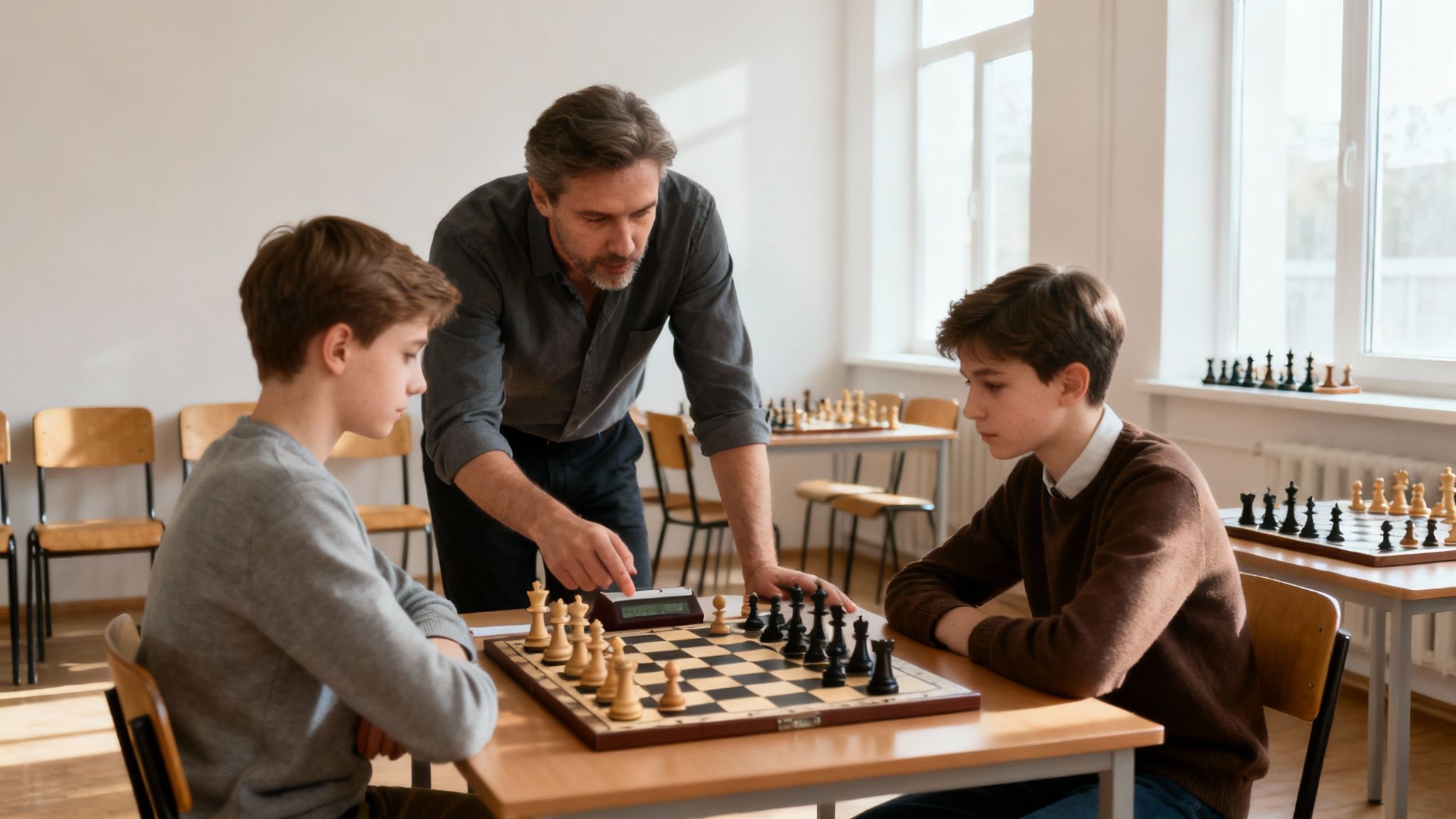
Trying to get better at chess all by yourself can feel lonely. You can do puzzles and watch videos, but it's easy to get stuck and not know how to get better.
Sometimes, the fastest way to improve is to get some help. A good support system, like a coach or a local chess club, can make a huge difference. You’re no longer just guessing what to work on; you get clear advice from an expert and a community that loves the game as much as you do.
What a Good Chess Coach Really Does
A common mistake is thinking a coach is just there to teach you cool openings. They can help with that, but a great coach does so much more. Their real job is to be an expert pair of eyes on your game.
They see the bad habits that are holding you back—mistakes you might not even know you're making. Maybe you always attack too much in quiet positions, or you panic when you're low on time. A coach will see these patterns and give you special exercises to fix them.
A coach isn’t just a teacher; they're a guide who helps you understand your own thinking. They show you why you're making certain mistakes, which is the first step to finally fixing them for good.
You just can't get this kind of personal feedback from a book or a YouTube video. It’s all about you. If you're thinking about getting a coach, looking into online chess coaching can connect you with experienced players who will make a study plan that's perfect for you.
Tapping into India's Growing Chess Scene
Being part of a community is another big motivator. When you join a local chess club, you suddenly have a whole new group of people to practice with, friendly rivals, and experienced players who are often happy to share tips.
Playing against the same people online is fine, but playing against a real person teaches you so much more about handling pressure and facing different playing styles. This is where you can really test your skills.
India’s chess community has also gotten amazing support recently. The government has put a lot more money into chess, with funding going up from ₹4 crores to ₹5.5 crores since 2019. This money is being used to find and train the next generation of champions in special camps where the best young players learn from world-class trainers.
Finding Your People
Getting connected is easier than you might think. Here’s how to start:
- Search for Local Clubs: A quick online search will show you chess clubs in your city. Most have regular meetings and welcome players of all levels.
- Play in Tournaments: Don’t be afraid to enter a local tournament, even if you don't feel ready. It's the best way to get real experience.
- Join Online Forums: Indian chess forums and social media groups are great places to talk about games, ask questions, and meet other players.
By mixing personal coaching with the energy of a chess community, you create the perfect place to grow. You get the expert advice you need and the competitive practice that pushes you to become a better chess player.
Common Questions About Improving at Chess
As you start getting more serious about chess, you're going to have questions. It's totally normal to wonder if you're doing the right things or what to do when you feel stuck. Let's answer some of the most common questions that players have on their journey to get better.
How Do I Know if I'm Actually Getting Better?
Your online rating is the clearest sign, of course. If it's generally going up over a few months, you're definitely getting better! But we all know ratings can go up and down, so it doesn't tell the whole story.
You need to look for other clues. For example, are you solving puzzles faster than you used to? When you look at your games, are you making fewer of those painful, one-move mistakes that make you want to facepalm? These are great signs.
Here’s another big one: your understanding. When you watch a Grandmaster’s game now, do you understand the plans and ideas behind the moves better than before? If the answer is yes, your chess brain is getting stronger, even if your rating is stuck for a week.
How Many Hours a Day Should I Study?
This is a big question, and the answer might surprise you. Being consistent is way more important than how long you study. A focused hour of study every single day is much, much better than studying for seven hours on a Sunday and then forgetting about chess all week.
For most players who want to get a lot better, 60 to 90 minutes of focused practice each day is a great goal. That’s enough time to do the important stuff:
- A good session of puzzles to keep your mind sharp.
- Some quick endgame practice to build your skills.
- Playing and briefly looking over one serious, longer game.
Making this a daily habit is the real secret. It keeps chess ideas fresh in your mind and builds the kind of momentum that leads to real, long-lasting improvement.
What Should I Do if My Rating Is Stuck?
Getting stuck at a certain rating is something every single chess player goes through. It’s annoying, but it’s a totally normal part of getting better. The first thing to do is not to panic.
Start by taking a short break. Seriously, just step away from chess for a day or two to clear your head. When you come back, change your routine. If you've only been doing puzzles for the last month, maybe switch your focus to studying basic rook endgames for a week.
Getting stuck often means a specific weakness in one area of your game is holding you back. The problem is, sometimes you're just too close to your own games to see what it is.
This is where a fresh pair of eyes can be a huge help. Ask a stronger player or a coach to look over a few of your recent losses. They can often see a mistake you keep making or a bad habit that you don't even know you have. Fixing that one thing is often all it takes to get your rating going up again.
Is It Better to Play Fast or Slow Games?
If you're serious about getting better at chess, playing slower games is much, much better. Almost all coaches agree on this. Longer games, like 15 minutes per side with a 10-second bonus per move (15|10), are where you really learn.
Slow games force you to actually think. You have time to calculate moves properly, figure out what's going on, and come up with a real plan. This is how you build the good mental habits that you need to play well.
Fast games like blitz (3 to 5 minutes) are a lot of fun, and they can help with your gut feelings and opening speed. But if that’s all you play, they can create some terrible habits, like making quick moves without thinking. Use slow games for your serious practice and save the fast games for fun.