Imagine having your own chess guide, someone who's there with you at home, ready to look at your game whenever you are. That’s the simple, cool idea behind chess online coaching. It’s like having a sports coach who looks at every move you make, but they connect with you through your computer or tablet.
What Is Online Chess Coaching?
Have you ever watched a cool chess video on YouTube or tried a puzzle on an app? Those are great ways to learn a few tricks, but online chess coaching is totally different. This isn't about watching videos that thousands of other people are also watching. It’s a live, one-on-one lesson made just for you.
Here's a way to think about it. Watching a YouTube video is like reading a recipe. You get the steps, sure, but you’re on your own in the kitchen. Having an online coach is like a chef standing right there with you, showing you exactly how to chop, season, and cook. They’re watching what you do, pointing out mistakes, and answering your questions right away.
This personal attention is the secret sauce. A good coach doesn't just throw random chess ideas at you. They take the time to understand how you play, your habits, and how you think.
Your Personal Game Plan
One of the best parts of chess online coaching is making a training plan that actually fits you. A coach will look at your past games to find patterns—both good and bad—that show how you play.
Maybe you’re great in the opening but always mess up in the endgame. Or maybe you keep falling for the same traps over and over. Your coach will see these things and create lessons to fix those problems. That means you stop wasting time on stuff you already know and focus on the areas that will help you get better the fastest.
This usually includes:
- Game Analysis: Going through your games, move by move, to see what you did right and where things went wrong.
- Targeted Lessons: Focusing on certain ideas, like a new opening or a strong checkmate pattern that helps with your common mistakes.
- Custom Puzzles: Solving puzzles picked out just for you to make the weak parts of your game stronger.
A coach’s job is to see what you can’t see. They bring a fresh eye that’s almost impossible to get when you’re just studying by yourself. That new point of view is often the key to breaking through a level you've been stuck on.
More Than Just Moves
Finally, online coaching is about way more than just learning where to move the pieces. A great coach is also a mentor who helps you think like a winner and build strong confidence. They teach you how to manage your time when you're under pressure, how to feel better after a tough loss, and how to stay focused when it counts.
This mental side of the game is huge, and it’s something you just can’t get from a book or an app. By working with a coach, you get help with everything to become a smarter, stronger, and tougher chess player. You’re not just learning chess; you’re learning how to compete, think ahead, and do your best under pressure—skills that help you in life, too.
A Look Inside a Typical Online Chess Lesson
So, what really happens in an online chess lesson? It’s not just playing game after game and hoping you get better. Think of it more like a workout for your chess brain, led by an expert who knows exactly what you need to work on.
Let’s take a peek.
Most lessons start with a quick, friendly chat before jumping into a review of your recent games. Your coach will pull up one of your games on a shared, interactive chessboard. This isn't just them sharing their screen; it's a digital board where you both can move pieces, draw arrows, and highlight important squares in real time. It feels just like you’re sitting across from each other.
Your coach will point out the awesome moves you made—which is always a nice confidence boost. But more importantly, they’ll gently walk you through the moments where things didn't go so well. They might ask something like, "Okay, on move 15, you played your rook to d1. What were you thinking here?" This isn't a test. It's their way of getting inside your head to understand how you think and find the reason for any mistakes you keep making.
Building Your Skills Piece by Piece
After looking at your game, the lesson moves on to learning something new. Based on the weaknesses they’ve seen, your coach will teach you a new idea. Maybe you’ve been getting beaten by a certain opening, so they’ll teach you a good defense against it. Or maybe your endgames are a bit weak, so you'll practice a specific checkmating pattern.
They’ll explain the main ideas in simple words, using the board to show you examples. The goal isn’t just to memorize moves but to really understand the why behind them. For example, instead of just telling you to control the center of the board, they'll show you exactly how a strong center gives your pieces more power and room to move.
This turns big ideas into real skills you can use in your very next game. Many players find that solving puzzles is a great way to practice these new skills. If you're looking for a challenge, you can always try some hard chess puzzles to test yourself between lessons.
Your Personal Chess Training Plan
A really great online coach doesn't just give you one-off lessons. They build a whole training plan just for you—think of it like a workout plan for getting better at chess. Each lesson connects to the last one, building on what you’ve already learned.
Here’s a simple picture of how a coach helps you grow, from finding problems to building a winning plan.
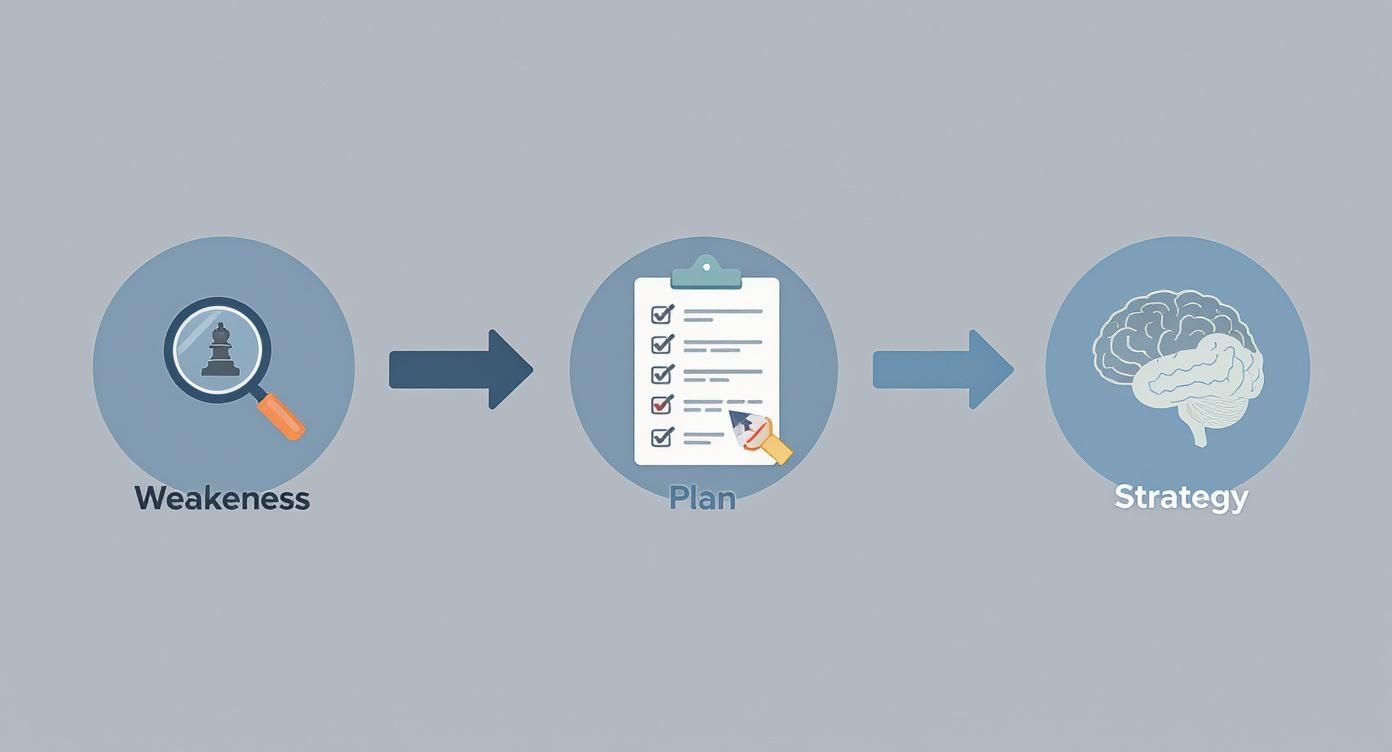
This shows that good coaching starts by finding your weaknesses, making a plan to fix them, and then teaching you the right strategies to use. This organized way makes sure every lesson has a clear point and moves you forward.
Your training plan might include things like:
- Opening Work: Learning the first 10-15 moves of a few openings that fit how you like to play.
- Tactics Training: Solving certain kinds of puzzles (like forks or pins) that you often miss in your games.
- Endgame Drills: Practicing key endgame positions until you can do them without thinking.
- Strategy Lessons: Understanding bigger ideas like pawn structures or how to make your worst piece better.
Your coach is your personal guide, making sure you spend your time on the things that will help you the most. Instead of just wandering around online, you have a clear, step-by-step path to becoming a stronger player.
The lesson usually ends with a quick summary and some "homework." This might be a few puzzles to solve, a certain opening to practice, or a master's game to study. This way, you keep learning and getting better even between your lessons. Every part of the lesson is meant to be fun, interesting, and all about you.
So, is online chess coaching the right move for you or your child?
It’s a great question. While almost anyone can get better with a coach, some players will find it super helpful. Let's break down who gets the most out of this kind of personal help.
One of the biggest groups is young beginners. Learning chess should be fun, not another boring school subject. A good coach knows how to make the rules stick by turning lessons into a game, with fun challenges and goals. Instead of just memorizing how a knight moves, they learn through stories and cool puzzles.
This early help is super important for building a strong foundation and, more importantly, a real love for the game.
Getting Past Annoying Plateaus
Are you an intermediate player who feels totally stuck? Maybe your rating has been stuck in the same 100-point range for months, and you just can't figure out why. This is one of the most common reasons players look for chess online coaching.
When you're stuck, it's usually because of a hidden weakness—something you're too close to your own games to see. You might be making the same small mistake over and over without even knowing it.
A coach is like a detective here. They'll go through your games, find those hidden patterns, and give you a specific plan to fix them. They might notice you have trouble in games with a certain pawn structure, or that you always miscalculate when things get complicated.
A coach gives you that important outside view that helps you stop being frustrated. They can spot the one or two key things that, once fixed, will help you reach the next level. This specific advice is exactly how you break through a plateau and start getting better again.
Making Chess Fit a Busy Life
What about busy adults? You might love chess but have a hard time finding time to get better with work, family, and everything else. Trying to study on your own after a long day can feel impossible.
This is where online coaching is really great. You can schedule lessons that fit your life—whether that’s early in the morning, on your lunch break, or late at night after the kids are asleep. No travel time, just good, focused learning from your own home.
This has made getting serious about chess easier than ever. The online chess coaching market in India has grown fast, thanks to better internet and people wanting to learn online. In fact, over 70% of chess learners in India now choose online coaching just because it’s so easy. You can explore more about this trend and India's growing role in the chess world.
A coach helps you use your limited time in the best way by making a study plan you can actually stick to.
From Casual Player to Serious Competitor
Finally, online coaching is a game-changer for anyone with a competitive goal. Do you want to win your local club tournament? Or maybe you just want to finally beat that one friend who always seems to win against you.
Having a coach on your side gives you a huge advantage. They give you:
- Structure: A clear path forward, so you're not just guessing what to study next.
- Accountability: Someone to keep you motivated and on track with your goals.
- Confidence: Knowing you've prepared with an expert gives you a big mental boost.
Whether you're a kid just starting out, a busy adult, or a club player ready to get serious, a coach gives you the personal roadmap you need to reach your chess goals.
How to Find the Right Online Chess Coach
Choosing a coach is a big deal, and it’s totally fine to take your time finding the right person. Think of it like picking a teammate—you need someone who understands your goals and, more importantly, makes you want to play better. The right coach can make your chess online coaching experience so much better.
So, where do you start? The world of online chess coaching can feel huge, but if you focus on a few key things, you can easily find the perfect mentor for you.
Check Their Titles and Experience
First things first: you want a coach who really knows their stuff. The easiest way to check this is by looking at their official chess titles and rating. A title like Grandmaster (GM), International Master (IM), or FIDE Master (FM) tells you they are a very, very good player.
But here’s an important point: being an amazing player doesn’t automatically make someone a great teacher. You should also look for coaches who have experience working with players at your level. A coach who is great at helping intermediate players might be a much better fit than a GM who only trains top pros.
When you're figuring out how to find the right coach, it helps to know what makes a good learning program. The ideas behind how to create online courses that students actually love can give you some great tips.
Match Their Style to How You Learn
This part is super important, so don't skip it. Every coach has their own personality and style. Some are like energetic cheerleaders, full of excitement. Others are more like calm, serious teachers who like to go deep into ideas.
Think about what works for you. Do you learn best when things are fun, or do you like a more serious, step-by-step plan? There’s no right or wrong answer; it’s all about finding a personality you get along with. Reading reviews from other students is a great way to get clues about a coach's style.
A great coach-student relationship is all about good communication. You should feel comfortable asking questions, saying when you don't understand something, and sharing your goals.
Understand the Plan and Pricing
Before you decide, get a clear idea of how the coach plans their lessons and what they charge. Most coaches are open about their prices, which are usually per hour or in packages for a bunch of lessons.
Don't be afraid to ask for their teaching plan. A good coach will have a clear roadmap for how they plan to help you get better. This might include:
- Game Analysis: Looking at your games to find your strengths and weaknesses.
- Opening Preparation: Helping you build a solid set of openings you feel good about playing.
- Tactical Training: Giving you puzzles and exercises to make your tactical skills sharper.
- Endgame Technique: Teaching you how to win when you have an advantage near the end of the game.
Knowing their plan helps you see if it matches what you want to learn.
Always Ask for a Trial Lesson
This is probably the most important step. Almost every good coach offers a trial lesson, sometimes for a lower price or even for free. You should definitely do it!
Think of it like test-driving a car. A trial lesson gives you a real feel for the coach's personality, their teaching style, and how well you talk to each other. It’s your best chance to see if they are a good fit.
During the trial, pay attention to how you feel. Are you having fun? Are they explaining things in a way that makes sense to you? Do you feel excited to learn more after the lesson? This one lesson can tell you everything you need to know about whether it's the right coach for you. Making a smart choice here will help you succeed and have a lot more fun with chess.
Preparing For Your First Online Lesson
Alright, you've picked your coach—that's awesome! Now, let's get you ready for your first lesson. Don't worry, the tech stuff is way easier than learning a new chess opening. A little prep will make sure your lesson is all about chess, not about fixing computer problems.
Let's walk through what you need to make sure your first lesson is smooth, useful, and fun from the very start.
Your Basic Tech Checklist
You definitely don't need a fancy gaming computer for chess online coaching. Most computers and laptops today are perfectly fine. That said, a bigger screen really helps you see the board clearly and follow your coach’s ideas without squinting.
Here's a simple list of what you'll need:
- A Good Device: A laptop or desktop computer is best. The screen size makes a big difference. A tablet is okay, but a phone screen is just too small for a full lesson.
- A Stable Internet Connection: This one is a must. A bad connection means the video will freeze, making it hard to hear your coach or see the board. It can get frustrating really fast.
- A Headset with a Microphone: Using a simple headset cuts out background noise and helps you hear your coach clearly. It makes the conversation feel more like you're in the same room.
Getting these basics right means you can forget about the tech and just focus on chess.
Getting Used to the Websites
Your coach will let you know which websites they use, but it's usually two things: a digital chessboard and a video call.
For the board, most coaches use popular sites like Chess.com or the free site Lichess.org. These are great because you can both move pieces, and your coach can draw arrows and highlight squares to explain ideas.
For the chat, you'll probably use a common video call tool.
The most common choices are Zoom, Google Meet, or Skype. These let you see and hear each other, making the lesson feel much more like it's in person. It’s way more interesting than a simple phone call.
This simple setup is a big reason why chess online coaching in India has become so popular.
Your Pre-Lesson Setup Guide
Feeling prepared helps you relax, which helps you learn. Take just a few minutes before your first lesson to get everything ready. It’s a little bit of time that helps a lot.
- Create Your Accounts: Go ahead and make your free accounts on the chess website (like Lichess) and the video tool (like Zoom) that your coach mentioned.
- Test Your Audio and Video: A few minutes before the lesson, open the video app. Do a quick check to make sure your camera and microphone are working.
- Find a Quiet Space: Try to find a spot where you can focus without anyone bothering you for the whole lesson. This helps you stay focused on the board and your coach's advice.
- Add Your Coach: On the chess website, send a friend request to your coach’s username. This makes it easy to start a game or look at a board together once the lesson begins.
Taking these simple steps sets you up for a great lesson. For an idea of how these lessons fit into a bigger plan, check out our guide on online chess training. Being ready means your first lesson will be all about one thing: getting better at chess.
How to Measure Your Chess Improvement
So, how do you know if your chess online coaching is actually working? It's a good question. While winning more games is a great feeling, it’s not the only way to see you're getting better. Real progress is about more than just your wins and losses.
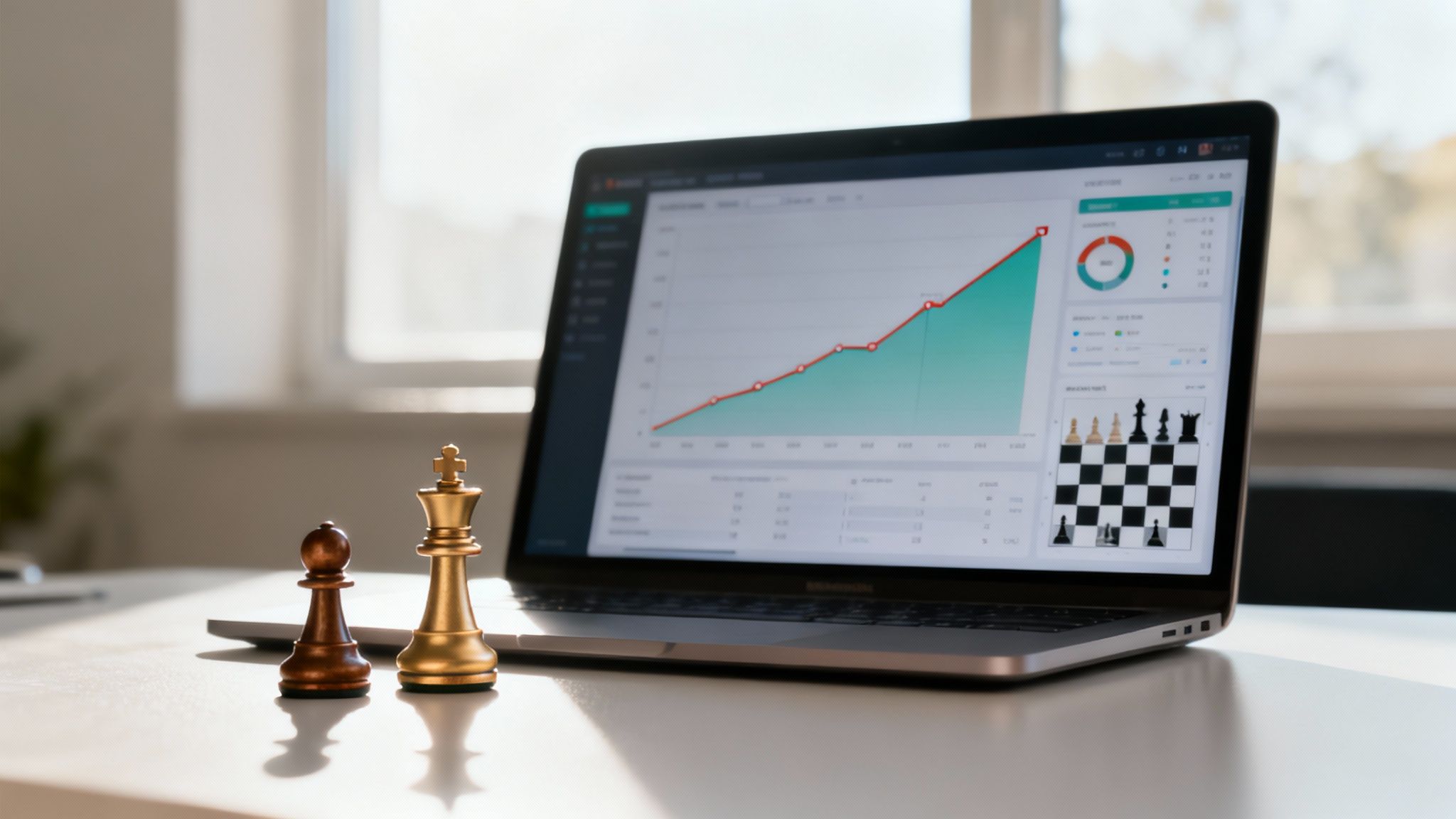
Let's break down the different signs that show your skills are really growing, one move at a time.
Looking Beyond Just Your Rating
Your online rating is a simple number you can track. Watching it go up is one of the best parts of getting good at chess, and it's a clear sign that you’re beating stronger players more often.
But a rating only tells you part of the story. Sometimes your rating might stay the same for a while, even when you're learning a ton of new stuff. This is totally normal! Real improvement is happening, and there are other important clues to look for.
Think of it like learning to play an instrument. At the beginning, you might not be able to play a full song perfectly, but you’re learning new chords and your fingers are getting faster. Those small wins are what lead to big concerts later on.
Spotting the Real Signs of Growth
So what are these other signs? They're the little "aha!" moments that happen during your games. A good coach will help you see them, but you can learn to spot them on your own, too.
Look for times when you:
- See Tactics You Used to Miss: Are you now spotting forks, pins, and skewers that you would have missed a few months ago? That’s a huge sign your brain is getting sharper at chess.
- Understand Bigger Plans: Instead of just reacting to each move, are you starting to make your own long-term plans? Maybe you're thinking about your pawn structure or making a safe spot for your knight.
- Feel More Confident: Do you feel less worried in a tough spot? Feeling more sure of yourself and your ability to find good moves is a huge step forward.
One of the best ways to see your progress is to look at a game you played six months ago. You’ll probably spot mistakes and see better moves right away—moves you wouldn’t have even thought of back then. That’s solid proof you’ve gotten better.
Setting and Reaching Small Goals
A great coach helps you turn big dreams into small, easy steps. Instead of a big goal like, "I want to be a better player," you’ll work together to set clear, reachable goals.
This is where good chess online coaching really helps. You might focus on learning a new opening for a month, getting better at winning an endgame, or managing your time better in fast games.
Every time you reach one of these small goals, you're building confidence and proving to yourself that your hard work is paying off. It’s an organized, clear way to see your progress and stay excited on your journey to becoming the player you want to be.
Common Questions About Online Chess Coaching
Thinking about getting a chess coach but still have a few questions? You’re not the only one. It's a big step.
Let's clear up some of the most common questions people have. Getting these answers will help you feel more sure of yourself as you start looking for the right coach to help you on your chess journey.
How Much Does Online Chess Coaching Cost in India?
The price for online chess coaching in India can be very different, mostly depending on the coach's experience and rating. A newer coach might charge a few hundred rupees an hour, which is a great place to start for beginners.
On the other hand, a Grandmaster or a famous teacher with a lot of experience will charge more for their expert knowledge. A good tip is to look for coaches who offer packages of many lessons. Buying lessons together often makes the price per hour lower and is a smart way to get regular training without spending too much. Always ask what's included before you pay.
What Is a Good Age for a Child to Start Coaching?
Most coaches, including me, agree that a great time for a child to start is around 6 or 7 years old. At this age, kids can usually pay attention for a whole lesson (about 45–60 minutes) and are ready to really understand the rules.
The most important thing, though, is if they are interested in the game. Every child is different, and if they are really excited about chess, that's the best sign. A good coach knows how to make lessons fun and interesting for young players.
What if I Do Not Connect With My Coach?
This is a really important question, and it’s exactly why trial lessons are such a great idea. Finding a coach whose teaching style matches how you learn is the key to getting better and having fun.
If you take a few lessons and feel it’s just not working, it is totally okay to look for someone else. Any professional coach will understand. The main goal is for you to get better and love the game, and the right coach will make that happen.